Are Pokémon Cards a Good Investment?
Pokémon cards are currently going crazy, and it’s not just Charizard
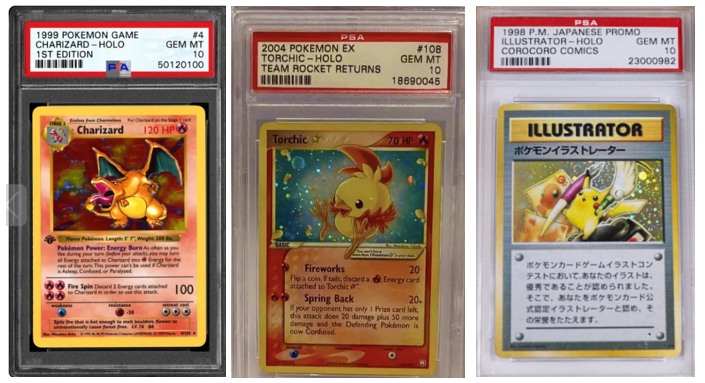
Pikachu Illustrator, the holy grail of Pokémon cards, sold earlier this year for $16,492,000.
Another card, the Base set 1st Edition Charizard, sold for $1,385,274.
And last month, Torchic Gold star sold for $2.7M. This is (in my opinion) the most impressive sale, because that card came from normal Pokémon card packs, packs that I opened as a little kid and totally could have had in my collection.
This begs the question: should Pokémon cards be part of a well-diversified portfolio?
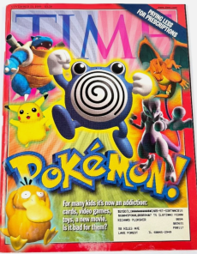
Pokémon first became popular when it came out in 1996 in Japan. In 1998, it exploded in North America in 1998 with the release of Pokémon Red & Blue. Time magazine even featured Pokémon on its cover in 1999.
Pokémon remained popular when I was a little boy in the early 2000s, and is still popular today.
The Basics of Investing
When you buy a stock, you are essentially buying the present value of all the future cash flows a company is set to earn. When you buy a global basket of stocks, you are making the bet that GDP will rise over time and your equity in those cash flowing companies will increase with it.
You can value equity in a multitude of ways, but none of them apply to Pokémon cards. This is because a Pokémon card has no cash flows, and any profit from one is contingent on someone else paying more for the same card in the future.
Pokémon cards can be thought of as mini fungible art (because there are multiple copies of the same card), and are comparable in valuation techniques to art, gold and bitcoin.
For today’s discussion, we should start with the two components that make art valuable: demand and scarcity.
Demand
If you go into your local Target or Walmart this week, you won’t find a single pack of Pokémon cards. Older, out of print packs can cost thousands, and there currently seems to be unlimited demand for anything the Pokémon company releases. Scalpers will wait in line for days to get a small allocation of the new product, as there is an instant profit to be made.
But, this is a short term, supple constraint since the Pokémon company could open up more factories and print more cards.
Needless to say, the demand is there. Whether it will continue is a better question, and I think it will.
Pokémon’s catch phase is “Gotta Catch ‘em All,” and this mantra applies to how collectors collect. They need to have every new copy of a card, they need to have their favorite card in every PSA grade, they need the master set of every set that comes out – they need it all.
Unlike other collectibles, Pokémon cards are very small. Because of this, a collector can amass a gigantic collection without needing a ‘museum.’ Collectors often keep cards in a binder or tucked away in a closet, whereas with collectibles like art, only so much can fit on your walls. In the mind of Pokémon collectors and investors, space is not seen as a constraint to their collection.
Scarcity
With a collectible, the price only goes up if demand continues to increase with supply being fixed; thus, there has to be scarcity to make something an investable collectible.
Scarcity is most valuable when it can be clearly defined. For Pokémon cards, Grading solves this problem.
Before the early 1990s, buying a trading card meant trusting the seller’s word. Condition was a matter of opinion, there was no shared vocabulary for it, and a card described as “mint” by one dealer might be “good” to another. That made long-distance transactions risky, kept prices inconsistent, and limited the hobby largely to in-person shows and shops. Professional grading changed this.
Beginning with Professional Sports Authenticator (PSA) in 1991 and later followed by others like Beckett Grading Services and Sports Card Guaranteed, third-party graders introduced a standardized 1-to-10 scale, authenticated each card, and sealed it in a tamper-evident slab. The slab turned a subjective judgment into a trusted standard, so a buyer could confidently buy a card they had never held, and that card would became a fungible, comparable asset that could be bought and sold on a growing number of online marketplaces and later through auction houses.
Grading also made scarcity measurable. Population reports (which publish how many copies of a given card have earned each grade) revealed that while many copies of a card might survive, very few existed in top condition. A 1952 Topps Mickey Mantle might have thousands of surviving examples, but only a handful in Gem Mint 10 condition. That gap is what drives the dramatic price premiums for high grades. In effect, grading created a market not just for cards, but for condition itself, giving collectors and investors a transparent, data-backed way to define rarity, price it, and trade it with confidence.
Pokémon cards show the same grading dynamic at a much larger scale. Because so many were handled by children, most surviving card copies grade well below perfect. The same grading infrastructure that standardized sports cards matters more here, because it begs the question: how many copies exist at the top grade?
That is why the PSA 10 Torchic with a population of only 17 can command a large premium. Torchic is a popular Pokémon, but by no means is it Pikachu. Still - a buyer knows no more than 16 other identical copies exist, and any collector chasing a complete set or a top-graded registry entry has to compete for one of those 17 slabs.
Once grading made scarcity measurable, a card’s value came less from the card itself than from how rarely a perfect copy of it exists, multiplied by how many people want one.
So, are they Investable?
I would argue that Pokémon cards do have Demand and Scarcity, but there is a third component to investing: the ability to buy and sell custodied assets at fair market prices.
Unlike equities, gold, or bitcoin, Pokémon cards do not trade at penny bid ask spreads. Selling on eBay will lead to a transaction fee of nearly 14%, plus any shipping costs. At a card show, the vendors can be thought of as the market makers for ETFs, and instead of penny bid ask spreads, they may buy at up to 80% or 90% of the value of certain cards. You can try selling on Facebook marketplace, but that adds security risks and buyers who are looking for a discount.
A spread that big to buy and sell makes a meaningful impact on your returns, and this is all pre-tax. Here’s an example:
Option A: You buy a Pokémon card for $100. Three years later, you sell it on eBay for $200. While the card went up $100, eBay will take 13.25% of the total, which reduces your profit to $73.50. Then, you owe a 28% collectible tax on the gain at the federal level, plus any state tax based on your marginal bracket. Using 9.3% tax for a CA resident, you would owe $27.42. This reduces your total profit to $46.08, meaning over 50% of your gain is eliminated with taxes and fees.
Option B: Contrast that with investing in a Roth IRA, where over 3 years a globally diversified equity portfolio goes up a total of 50% and your $100 is now worth $150. You can sell and pay no taxes or fees, so while your return was half that of the Pokémon card, you still ended up with more money.
Pokémon Cards are just Commodities
Pokémon cards trade much like commodities once grading strips away their subjectivity. A commodity is a good whose units are interchangeable, priced by supply and demand rather than by the identity of the individual unit. Every PSA 10 copy of a given card is, by definition, the same product as another, just as one bushel of Grade A wheat is the same as another.
Buyers don’t inspect a card; they check the grade and population report and pay the going rate. Prices are quoted on live feeds, tracked by indexes, and arbitraged across eBay, auction houses, and dealers. The cards are bought and sold by investors who have never opened a pack.
Supply behaves like a commodity, too: once a set goes out of print, the only supply left is what survives in each grade, and any new submission to the grading companies moves the market like a harvest report.
Demand is cyclical and driven by nostalgia, new releases, celebrity buyers, and the availability of cash. Prices swing with sentiment far more than with anything about the card itself.
So, should you invest in Pokémon cards?
I love Pokémon cards and have been a lifelong collector, but ultimately, I think people should remain collectors first and not see cards as part of their portfolio. While there is no double of the demand or scarcity, the astronomical costs of buying and selling eat away at so much of your return.
If you want a hedge against inflation, own commodities. If you want to collect Pokémon cards, do so after investing and not as your investment strategy.
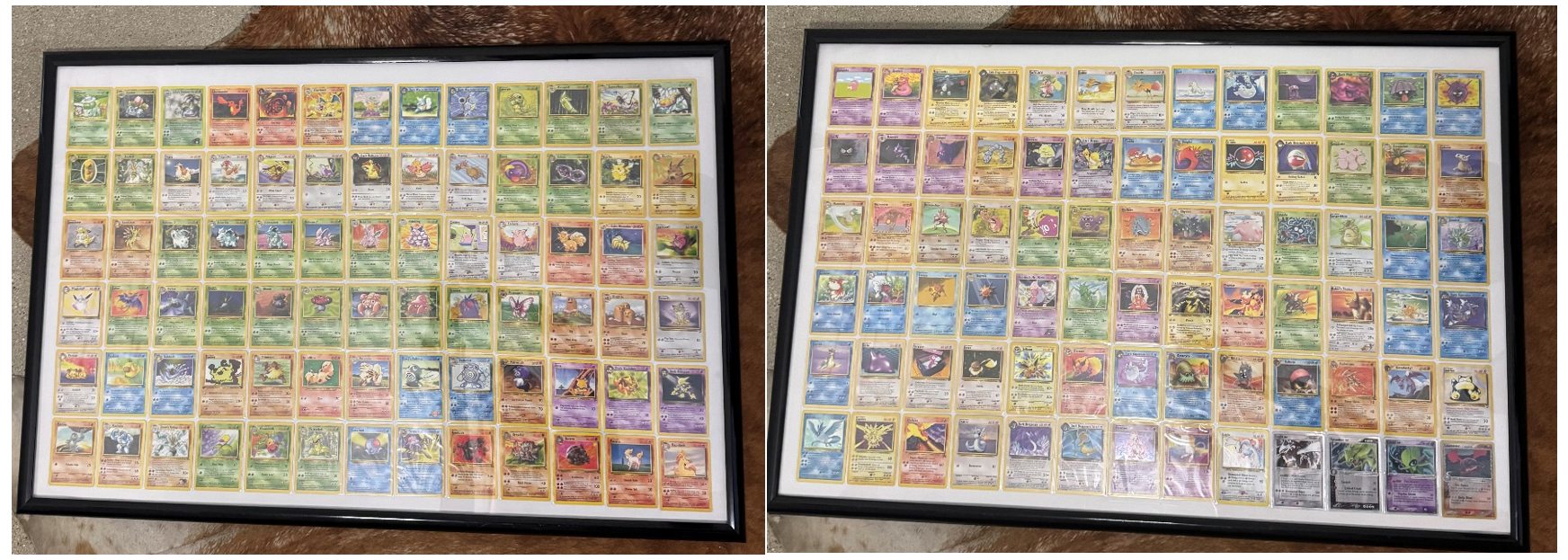
Happy Collecting to everyone and if you made it this far, here is my collection of the original 151 of all WOTC cards.
This material is purely intended to be general and educational in nature, and should not be construed as specifically-tailored investment, financial planning, tax, legal, or other professional advice. Information and data contained herein is as-of the date of publication, and may be subject to change in the future without notice. Any investment performance referenced is purely past performance, which is no guarantee of any future performance. Nothing contained herein should be construed as an offer to sell, a solicitation of an offer to buy, or a recommendation of any security or other financial product or investment strategy. All investment, tax, and financial planning strategies involve risk that you should be prepared to bear. You are highly encouraged to consult with professionals of your choosing before taking any action based on this material.